
The Truth About Color Temperature: A Science-Based Guide to Choosing the Right Light for Every Space
November 18, 2025
Most people believe one simple idea:
“Warm light is always more comfortable.”
But this is one of the biggest misconceptions in lighting.
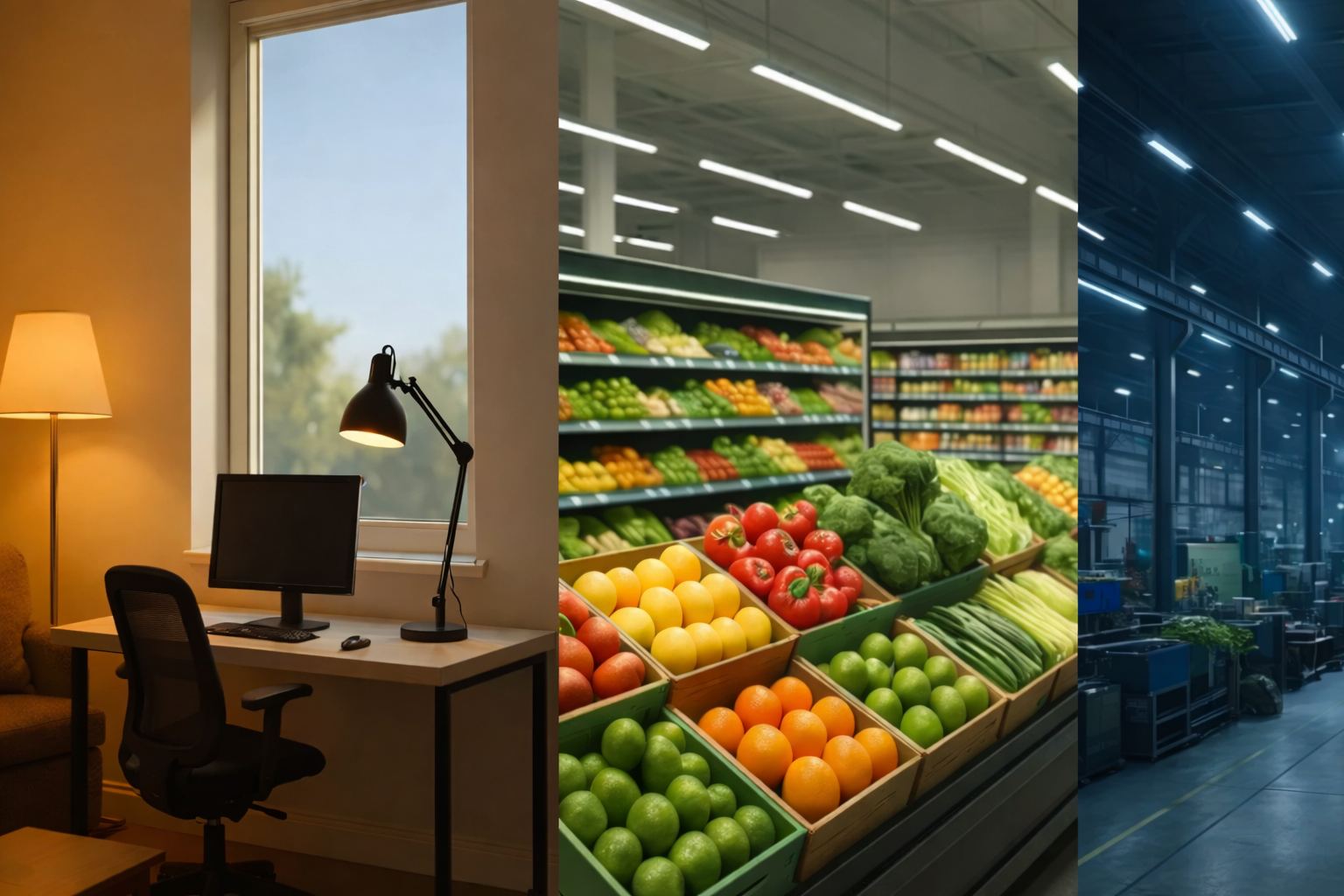
In reality, lighting is not just about brightness or ambiance—it is the emotional designer of a space, the biological regulator of the human body, and the visual interpreter that determines how accurately we see colors and objects. A cozy 2700K warm light may be perfect in a bedroom but counterproductive in an office. A crisp 6000K cool white may sharpen focus in a classroom but destroy the atmosphere of a restaurant.
Great lighting is not warm or cool—it is appropriate.
It matches the purpose, the time, the environment, and human biological needs.
Color Temperature: The “Mood Language” of Light
Color temperature (CCT), measured in Kelvin (K), determines how a light feels:
-
Warm White (<3300K):
Resembles candlelight. Relaxing, intimate, ideal for unwinding. -
Neutral White (3300K–5300K):
Balanced, natural daylight-like. Suitable for work and interaction. -
Cool White (>5300K):
Sharp, energizing, blue-rich light. Boosts alertness and precision.
The common mistake is overusing warm light:
-
Warm light in workplaces → fatigue, lower alertness
-
Warm light in industrial settings → poor visibility, increased safety risk
-
Warm light in retail → dull colors, less appealing products
ACE solves this by designing CCT based on purpose:
-
High bay lights for factories → ~4500K neutral, for clarity & safety
-
Park and landscape lighting → 2700–3000K warm, for comfort & Dark Sky friendliness
Circadian Lighting: Syncing Light With Human Biology
Light controls our circadian rhythm, mainly through ipRGC cells that detect blue light.
-
Blue-rich light (high CCT) → suppresses melatonin → awake & alert
-
Warm light (low CCT) → allows melatonin to rise → rest & relaxation
A proper circadian lighting pattern looks like this:
-
Morning (6–9 AM): 5000–6500K to activate the brain
-
Daytime (9 AM–5 PM): 3500–5000K for focus
-
Evening (after 6 PM): 2700–3000K to prepare for sleep
Even the “right” color temperature fails if color rendering is poor.
Color rendering determines how naturally and vividly objects appear under light.
We evaluates lighting quality using three international standards:
CRI (Ra):
The traditional index.
-
Ra >80 = Basic quality
-
Ra >90 = High-quality, natural color
R9:
Measures red rendering—critical for:
✔ Meat
✔ Fresh fruit
✔ Skin tones
✔ Artwork
ACE’s retail lights always ensure high R9, making products look more appealing and increasing sales.
TM-30-20 (Rf & Rg):
The modern international gold standard.
-
Rf evaluates color fidelity
-
Rg evaluates color saturation
ACE’s high-end hospitality and museum lighting achieves:
-
Rf >90
-
Rg ≈100
This makes materials look true to life and enhances the premium feel of a space.
A. Residential Lighting: Comfort + Well-being
Homes need adjustable lighting that suits different activities.
-
Bedroom: 2700–3000K warm → promotes sleep
-
Living Room: 3000–4000K neutral/warm → reading + relaxation
-
Dining Room: 2500–3000K warm with high R9 → enhances food colors
-
Study/Home Office: 3500–4500K neutral → improves focus
ACE’s dimmable and tunable-white solutions create flexible home environments.
B. Offices & Education: Light That Drives Focus
-
Open Offices: 4000–5000K, Rf>85 → reduces fatigue
-
Meeting Rooms: Tunable 3500–5000K → brainstorming vs. presentations
-
Classrooms: 5000K in the morning → 4000K in the afternoon → supports student alertness
ACE’s low-glare, flicker-free (IEEE 1789 compliant) designs protect eye health.
C. Retail & Hospitality: Light That Sells
-
High-End Retail: 3000–3500K, Rf>95 → enhances fabric and brand image
-
Fresh Produce: 3000–3500K, R9>80 → fresher, more vibrant colors
-
Restaurants/Cafés: 2200–2700K warm → cozy, relaxing atmosphere
ACE’s spectral tuning increases product attractiveness and customer dwell time.
D. Healthcare: Accuracy Meets Comfort
-
Operating Rooms: 5000–5500K, Rf>95, R9>95 → accurate tissue visualization
-
Patient Rooms: 2700–3500K warm, dimmable → promotes healing and comfort
ACE’s medical-grade luminaires meet strict UL and CE standards.
E. Industrial & Outdoor: Safety and Performance
-
Factories/Warehouses: 4000–5000K → clear visibility + safety
-
Streets/Parking Lots: 3000–4000K → lower glare & compliant with Dark Sky
-
Parks & Landscapes: 2700–3000K → gentle, ecological lighting
We specializes in industrial and harsh-environment lighting, with IP67/IP69K protection options.
Lighting is entering a new era:
✔ Dynamic adjustment
✔ Data-driven control
✔ Human-centric design
✔ Environmentally responsible engineering
We are at the forefront of this evolution with:
-
Smart controls (Zigbee, Bluetooth Mesh)
-
Tunable spectrum solutions
-
Energy-saving sensors
-
Precision optical design
-
Eco-friendly, Dark-Sky-compliant luminaires
Lighting is no longer just “illumination”—it is environmental engineering.